
January retail roundup
Acceleration, pressure and recalibration
Looking back at the biggest retail stories emerging from the US this January.
The year has started with a big bang; NRF energy, big boardroom moves, tariff tensions, AI everywhere, luxury wobbling and no surprise; value holding strong.
If anything, January was about acceleration under pressure. Here’s what defined the month.
AI AI AI ... yes, I know
AI is in every single conversation. Every event. Every investor call. Every blog post. At this point, it’s almost a broken record. We get it. It’s important.
But here’s the shift January made clear. The volume might be exhausting, yet the conversation is finally getting more interesting.
This is the first time AI feels less like a buzzword and more like embedded infrastructure.
A striking 78 percent of consumers interacted with AI or automation during holiday shopping, from delivery updates to virtual assistants. Google introduced its Universal Commerce Protocol, positioning it as a potential industry standard for how retailers power AI agents. Shopify’s stock surpassed its 2021 peak, fuelled in part by deeper AI integrations.
Even OpenAI is reportedly moving into hardware, targeting a physical consumer device in 2026. Screenless. Pocketable. Ambient.
So yes, we may be tired of hearing about AI.
But the difference now is that it is influencing real buying behaviour, reshaping operational systems and defining competitive standards. The noise is still loud but I feel like we're seeing some substance, finally.
And 2026 will test whether the experience matches the promise, especially as frustration with ineffective chatbots continues to grow.
Physical retail is splitting in two directions
January showed two very different retail stories unfolding.
On one side, contraction.
GameStop announced plans to close around 470 stores. Saks Global filed for Chapter 11, with Saks Fifth Avenue and its wider portfolio under financial strain following the Neiman Marcus acquisition. The luxury department store model is under real pressure.
On the other side, recalibrated expansion.
UNIQLO confirmed further US expansion. Lowe's Companies, Inc. relaunched its Kids Club programme to bring families back into stores and even began selling its own POS software to other retailers. Amazon unveiled a lighter, redesigned Dash Cart, doubling down on frictionless physical retail.
The store is not disappearing. It is polarising. Strong concepts are refining and investing. Weaker models are restructuring.
Luxury and beauty test resilience
Luxury felt volatile in January which with inflation, tarriffs and every other pressure, it's no surprise.
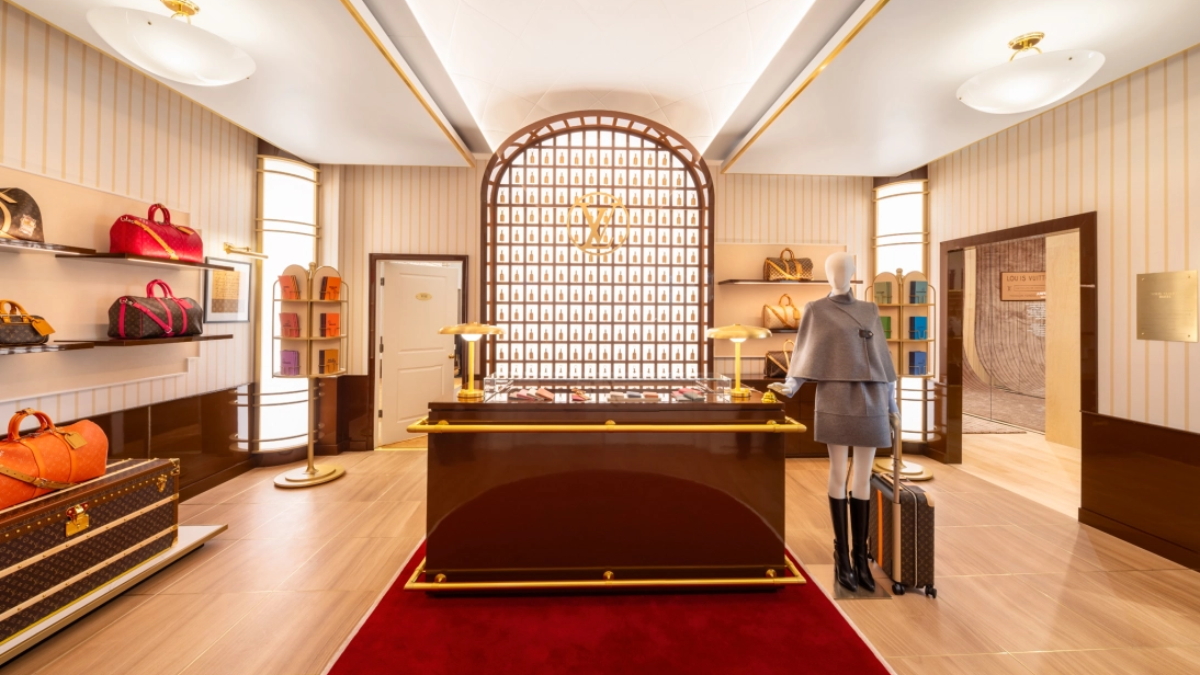
Saks Global sought rescue financing after missing a significant interest payment. Meanwhile, Louis Vuitton opened a monogram-only pop-up in Soho celebrating 130 years of its iconography, proving heritage storytelling still carries weight.
In beauty and fashion, momentum continued but with scrutiny. Lululemon paused sales of its Get Low line after complaints about sheerness, highlighting how fast product issues escalate in the social era. L'OCCITANE Group reportedly began selecting banks for a US IPO, signalling confidence in the category.
Meanwhile, men’s grooming continues its breakout trajectory, with global sales forecast to exceed $85bn by 2032. Identity-led categories remain resilient.
TikTok, trade + geopolitics
January also reminded us that retail doesn’t operate in isolation.
TikTok secured a deal allowing it to continue operating in the US under a newly structured majority American-owned joint venture. For creators, advertisers and retailers, this removed a major uncertainty almost overnight.
At the same time, trade tensions resurfaced. President Donald Trump threatened steep tariffs on Canadian imports if Canada proceeds with deeper trade ties with China. Tariffs are now expected to show up more visibly in consumer prices in 2026, after many businesses absorbed costs through 2025.
Home furnishings saw temporary relief as certain tariff increases were delayed to 2027, and markets reacted quickly. Policy volatility remains a core retail risk.
Consumers are cautious but not absent
The consumer story is nuanced.
Value outlets saw the biggest gains in foot traffic over the holidays, and 37 percent of consumers reportedly took on holiday debt, averaging more than $1,200. Spending is happening, but with restraint.
At the same time, TikTok Shop emerged as the third fastest-growing brand in the US last year, driving over $500m in sales between Black Friday and Cyber Monday alone.
Discovery is shifting. Caution and impulse are coexisting.
Talent, security and leadership shifts
January carried a strong human capital theme.
Amazon prepared a second round of corporate job cuts as part of broader workforce reduction plans. Walmart expanded tuition-free training in skilled trades to address labour shortages. Under Armour investigated a data breach affecting 72 million email addresses, underlining how security risk scales with digital growth.
Leadership moves were constant. Board changes at Target. A new CEO named at Saks Global. Departures at DoorDash and Lidl US. Retail is reshuffling as complexity increases.
January = Brace!
January made one thing clear. 2026 will not be simple.
AI is accelerating. Physical retail is dividing into winners and restructurers. Tariffs are moving from theory to price tags. Consumers are cautious but still spending. And leadership teams are under pressure to act decisively.
The year has started at full speed. Happy new year to you all.
Missed December?